Author Archives: Paul Frediani

Shake, rattle and roll.

It takes a literal earth shaking for Lila to come out of the protective shell she has created for her own personal protection. The earthquake “entered into our bones” explains Elena and goes on to tell how not only the real world but how in their internal world everything that is familiar and stabile no longer exist. There is nothing and no one to help during an earthquake. One can’t intellectualize, fantasize, desire, dream, fight, resist, outsmart a earthquake. There you are and there you will stay until mother nature decides to let it stop. It is an event that Lila has no control over, none, and it’s that lack of control that makes her break down to tell her truth. When an earthquake ends it leaves behind a euphoric feeling. Going from an extreme emotional fear of death and dying to survival will generate endorphins perhaps like a truth serum. It took this event for Lila to finally confess to Elena all the reasons of her behavior and they flood out of her uncensored even if she herself can’t understand them all. It’s not that Lila is a stranger to terror she says “the terror remains, it’s always between the normal thing and the other”. (pg 178) But there has always been ways for her to navigate, control and manipulate her terror, with an earthquake, it’s no use.

I tend to feel that without this event Lila would never have come clean to Elena. She would have remained as she is because she is too smart to do otherwise and that’s why Ferrante has to literally shake her up. On a personal note, I’ve experienced every major earthquake when living in San Francisco and L.A and I can attest that after such events there is a euphoric feeling, happy to be alive, to have friends and family. It does, if only temporarily, expose our true nature and what is important.


Love Sucks

Elena can’t or will not ignore all signs that the relationship with Nino is not a healthy one. It reminds me of the line in film The Leopoard spoken by Tancredi “For things to remain the same, things will have to change.” Which for an Italian prince in 1860 Sicily met a modified monachy was better than a republic. For Elena a life with Nino is better than a life with out him. She has dreamt about him since she was a child and now that she has him she will not let go. So who is doing the changing in this relationship? In each step of their relationship it is Elena. She changes her marriage, she changes her relations with her mother, her mother in law, with Lila, she changes locations where to live, she changes her role as a mother to her children by letting her mother in law take care of them, she even goes as far as to accept Nino as her lover even though he’s a notorious liar with a 8 month pregnant wife. But as an intelligent woman she is ready to ignore everything and she justifies it to herself when she says about their relationship “everything is changing, we are inventing new forms of living together’ (pg. 114) Just so that “things remain the same”. If I was a fortune teller I would bet that Elena is due for more emotional pain.

Back to the future

In the Elena Ferrante interview by Nicola Lagiola Ferrante speaks of the “those freeing themselves of gravitational pull of their birthplace”. This is consistent theme in her Neapolitan novels. It’s the constant pull and push that Elena feels from her birthplace. We see her trying to liberate herself from her native language, break though cultural and social barriers from her past. But can it ever be completely done? It would be like erasing a paper written in pencil, you may remove the lead but the impression on the paper will last forever. I believe the reason Elena constantly refer back to Naples is because regardless of it’s violence, crime, regardless of the terrible events that happened to her in her youth, it is still her safe space. When ever she feels out of sorts she quickly reverts to what is visceral. “And I realized that my voice was taking on the tones of the dialect, out of nervousness, that the words were coming to me in Neapolitan of the neighborhood, that the neighborhood-from the stradone and the tunnel-was imposing its language on me, it’s mode of acting and reacting, its figures, those which in Florence seemed faded images and here were flesh and blood(twlatws pg 326)”.  The past follows us through our lifetime, sometimes the good times maybe remembered as the bad times and sometimes the bad times can be interpreted as the good “The past, in its indeterminacy presents itself either through the filter of nostalgia or the filter of preliminary impressions (Ferrante). Here in America nostalgia is a big business. All around the country we have high school reunions. The four years in high school are for many the worst times in their lives, yet we celebrate and many go to them every 10 years or so, so they can see who got fat, old or ugly. Are we reliving a miserable past or has the past been filtered and become good with time? Like a high school reunion Elena will continue to return to Naples because she can’t help it.

Politics, God and sex

Elena has found a calling writing articles about workers struggles at the Soccavo factory in the local communist newspaper L’Unita. She had taken the paper of demands for improving working conditions written by Lila to create and write an article and instantly becomes somewhat of an expert on and darling of the political left. Does Elena breaks though the margins the smarginatura by writing for the newspaper because a serious novelist at the time in Italy would never consider doing so?  I posed a question to Lynn Nesbit renown literary agent, would she discourage her authors from writing journalistic pieces for a newspaper. She answered absolutely not in fact it would help sales of books. But then she added she did not know the publishing business in Italy and perhaps it’s different there.  

Although Elena gets the fame and credit it’s Lila that does the heavy lifting. Unwilling initially in getting involved, it is Pasquale who talks her into helping because she has the intelligence that he lacks. So it is Lila that becomes the point of the spear. It is Lila that writes the demands, who takes insults and threats from fellow employee and who bring the paper of demands to Bruno and puts her job in jeopardy. 

Julie writes of the turbulent times and social upheaval in the 60s and 70s. That students revolt against a “antiquated , rigid educational system and a capitalist patriarchal society.” But with all history there is conflicting opinions of political movements and their results. Some like respected Italian historian Indro Montanelli states that the sessatotto was a “lost of civility, where horde of illiterates invaded public and private lives with their ignorance” so some may have called it a “myth” others say that what was left behind was the ‘statuto dei lavoro’ workers rights and this in itself was well worth the pain. Kelsey writes that Elena says “I never though of being a freelance journalist. I did it because it made me happy.” She is not only writing behind a typewriter she is taking to the streets and the picket lines. Not like what it seems to me what the elites Gallini and Airota families do, hiding in their crystal towers cheering the working man on to do their bidding. Paraskevi asks the question why have a priest validate a marriage? I would answer Elena mother was raised in cultural Catholicism where it was not a choice and church was a natural part of everyday life and not challenged. What the mother may not understand and a question Paraskey poses is can one be with God without religion? I certainly believe so and in times of hardship we even see Elena struggle with faith when asking the Virgin Mary for help. Ariana writes of the importance of language and how it can hold someone back socially and economically. That was true in Italy in the 60s and 70s as it is true today in America.  One’s speech, right or wrong is an indication of upbringing and education.   

One importation omission in the blogs was any comment of the “elephant in the room” or as Pasquale says about Lila “she’s not made for sex”. Later we find that Lila does not have or can not experience the full pleasure of sexual intercourse. In my thoughts she’s unavailable either physically or mentally to fulfill a complete organism. To do so would mean abandoning full control which she is unable to do

Indro Montanelli https://binged.it/2WHWGfM

https://www.pw.org/content/agents_amp_editors_qampa_agent_lynn_nesbit?article_page=1

Calling Dr. Phil

Reading Emma Van Ness I couldn’t help thinking of Lila and Elena on the Dr. Phil show confronting their mothers on how poorly they were raised. They complain that they were raised in a poor Neapolitan rione with only a roof over their heads, food on the table and cloths on their backs. Then imagine if you will that they are raised in a time of economic boom, education possibility, free to read any books or newspapers they want, view any films and to be aspired by women to become anything they want.

Then imagine if you will their mothers Mrs. Cerullo and Mrs.Greco and how they were raised in a fascist Italian State where both fascist and catholic ideology were taught in school. Where poverty was common place and working to help the family put food on the table trumped getting an education. Where books, newspapers, films and TV was controlled by the state. Where surviving and experiencing the tragedies of war would mark them forever. Who could these women look up to for inspiration? Their vision and aspirations took them no farther than their village or their neighbors.

Van Ness’s Dixit Mater is complex and deep citing psychoanalysis and semiotician from Freud and Nietzsche. We could dwell in the weeds for ever in the complexity of motherhood. I would like to simplify it to “where the rubber meets the road” it maybe a simplistic way of looking at motherhood but I think every generation does the best they can with the knowledge that has been passed down to them.

Now you see her, now you don’t.

“‘Smarginatura’ is a concept that is associated with Ferrante’s novels. In the storyline it’s a physical phenomenon that Lila experiences a number of times in her life, where she feels that she is losing her solid outlines, she is in a way, blurring her boundaries and melting into her surroundings—metaphorically losing her identity.” (Grace Russo Bullaro, co-author of “The Works of Elena Ferrante. Reconfiguring the Margins)

At Professor Galiani’s party we see a Lila remaining within her margins (pg 158). Because regardless of her good station within the rione as Mrs. Carracci she can not break the boundaries of her social standing “she feels voiceless, graceless, depraved of movement, of beauty” “They didn’t want to know anything about her”.(pg 161). “They” are the intellectuals, the educated, the well to do. Lila being soundly rejected tries to turns the table on Lenu’ and all the guest at the party, mocking her and her attempt to “speak like those people” (pg 161). Ferrante gives us a clear view of Lenu’ who is thriving with a great desire to expand and grow beyond her rione and Lila who comes to a brutal understanding that she cannot nor is she welcomed outside of it.  

Life long competition.

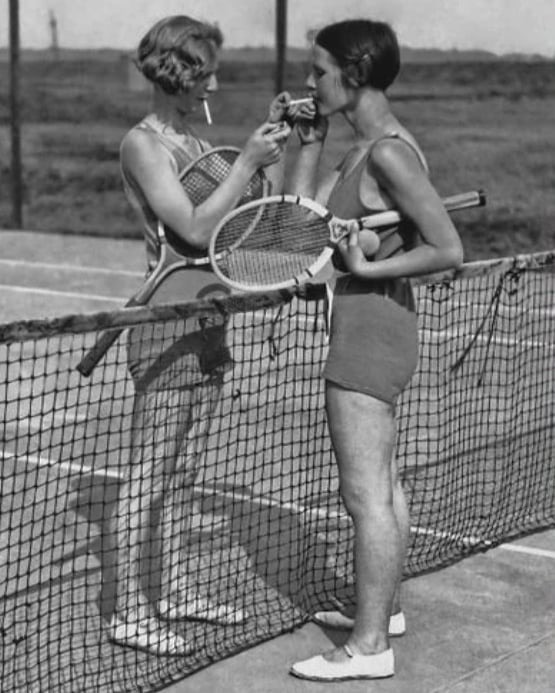
This picture reminded me of the life long competition between Lenu’ and Lila. Life and friendship is as a tennis match. There is give and take, one must use strategy to overcome an opponent’s strong point and maneuver the game so to play to one’s own strength. In the heat of the game one does not play aganst a friend, they play to win. After the point, game and set is over the competitors (Lenu’ and Lila) take a break return to being friends…….until the next game.

Sex in the city.

“ Stefano hears a voice from the past and maybe even before he was born. The order was be a man Stef, either you’ll subdue her now or you’ll never subdue her”.(Pg 41). We could assume the one of the voices he heard in the past was that of his father Achille. But Ferrante writes “even before he was born”. It’s perhaps since the beginning of time that boys are raised to have a sense of physical dominance “He is aware of his body as a means of dominating nature and as a weapon for fighting; he takes pride in his muscles as in his sex.” (Beauvoir, The Second Sex). It is with his sex that Stefano physically conquers what he believes is his right to take from Lila because of the  traditional vows which were made in church and his upbringing with as man.The rione did not sympathize with Lila but with Stefano, “there was someone who knew how to be a man.” (pg 45)

Lenù though not in love with Antonio is brimming with sexual desire. She makes herself fully available to Antonio. Lenù does not care “about being pregnant without being married, about sin, about divine overseers in the cosmos above or the Holy Spirit” (pg 26). This confuses Antonio and he refuses to have intercourse with her because “I want to do it the way it’s done with a wife, not like this”. (Pg 27).

Both Antonio and Stefano are misogynistic in their behavior. One, a man who takes what he wants because he has the physical power to do so and the other who withdraws the giving of pleasure to another and only pleased with pleasure to himself. 

For Lenù and Lila they too had grown up seeing their fathers beat their mothers and that was fine because their boyfriends, husbands or fathers could beat them out of love, to educate or re-educate them. (Pg 52)

Post 4

Benjamin’s love letter

I imagine Benjamin experienced culture shock in Naples. He was born in Germany, a country where the social norms are linear, cut and dry, black and white, legal or illegal. Where everything has it proper place and nothing is out of order. Where rules are to be kept without exception, where people maintain private lives behind walls, where individual expression and artist ways are out of the norm. This is the society that Walter Benjamin grew up.

Then imagine the first impression of his experience in Naples where culture, tradition and history is inexplicably part of its people whether they know it or not. Catholicism, Benjamin argues is at the heart of the city where it can accommodate both swindler and whore with the simple act of confession. I would argue that in a city with so much poverty a little faith gives many hope and a bit of stability.

Benjamin sees the city as porous without wall, there are no defined lines, where everything and everyone is up for a debate, where legally is just a measure in the eye of the beholder, where honor and respect tumps any law, where there is no place for anything or rather the same place can be used for anything, where people’s lives intermingle and spill into the street, where everyone from the fruit vendor to the bus driver to a pick pocket can be an artist.

This is the world Benjamin writes about. It is his captivating love letter to Naples. Like a young boy’s wide eyed open mouthed first visit to a carnival. The barker draws him in and he can’t resist it’s temptation.  It is a breath taking world, both beautiful and disturbing.  There are sights, sounds and smells that he has never experienced. It is strange to him, dangerous, mysterious and alluring.  And what boy wouldn’t love to run away with the carnival? Yet he can’t. He knows intellectually all the nooks and crannies of the city and is an excellent observer of the Neapolitan way of life. The yearning to be part of this beautiful kaleidoscope of Naples which is so foreign to him is undeniable. But it is a love affair that he can only have at the safe distance of a paper and pen.

post 3

A look, a smile, a slap.

The unwritten rules of everyday life in a rione of Naples that must be respected. Where a married pizzaiolo, who only smiles, blows a kiss innocently, perhaps not, at a pretty girl, earns him a slap in the face (pg 145). On what moral standings would such actions be justified? It is 1950s southern Italy, Naples is under the historical veil and influence of the conservative Catholic Church. Are the actions of the pizzaiolo so morally wrong that it makes Rino’s macho response acceptable? Ferrante writes little of faith or religion of her characters. I find it hard to believe that society was not influenced in some way considering that the Catholic religion was the official religion in Italy and was a compulsory course in school until 1984. She may very well be a atheist, the link I’ve added certainly suggest it and that maybe a reason religion is not a part of her book. Even though one may not be spiritual, religion surrounds the people and the cultural traditions of the day must be respected. Beyond the cloak of religion, tradition rules the day. One does not just ask a girl out without asking the parents, one does not get into a boys car alone, one does not openly flirt with a girl in pubic. These things are not done, if you do them, you do them a your own peril. Though a slap is not a knife stab or slice to the throat which is meant to kill it is a warning sign that worst can come one’s way.

The attraction men have to Lila is hard to pin point but whatever “it” is, she’s got it. I like to think it’s an energy, a free spirit which can not be defined by just physical beauty. She does have a strong effect on men and she is becoming well aware of it and enjoys the influence that it brings (pg144). How or will she learn to navigate this power to sway and enhance her life? Will she follow the cultural and religious traditions of the day or will she be a free sprit and write her own rules to live by? If we go back to the prologue “She wanted not only to disappear herself, but to eliminate the entire life that she left behind” (pg 23) it’s a good indication that she will write her own rules. 

https://www.theguardian.com/books/2018/apr/21/elena-ferrante-god-didnt-make-good-impression