The Godless Daughter

“She shouted that the marriage was worthless if the priest didn’t say that it was valid. She shouted that if I didn’t get married before God I would never be a wife but only a whore…she would never be able to go out of the house because of the shame of having a godless daughter” (Ferrante 49).

This episode takes place when Lenuccia is having a conversation with her mother about getting married to Pietro as soon as possible. Lenu’s mother, whose name still remains unknown, goes crazy and starts yelling at her oldest daughter for not wanting to get married at an altar, without a priest present to validate her marriage. Elena mentions that her mother herself is not religious; but the real reason why she wants her to have a reception iss because of what the people in the neighborhood would think of her daughter if she didn’t have one. The mother is clearly not pleased with her daughter’s decision not to have a ceremony at a church, but at the city hall, instead. She shouts curses at Elena and even compares a woman who doesn’t get married at church a “whore”. The mother would be so ashamed of her daughter’s decision of not having a Catholic marriage that she wouldn’t even leave her house. It’s ridiculous and fascinating at the same time, how religion lies under almost everything that is going on around us. A mother that is not religious is trying to persuade her daughter, who is also not religious, to get married at church just so she doesn’t end up being “godless”-whatever that is supposed to mean. Elena says that Pietro and his sister, Mariarosa, are not baptized and they wouldn’t baptize their kids, either. For Elena religion is not important, and I’m guessing the same thing about her mother. It’s amazing, however, to see the point of view of this era’s society on a female who does not wish to get her marriage validated by a priest. Another thing I don’t understand (maybe because I have a different perspective and grow up during a different time period) is: why does one have to go to church or be involved in it in order to be near God? Why is one who doesn’t go to church or doesn’t get married there “godless”? I thought that faith was something one carries within. But I guess this is a different matter of discussion.

Historical Background of The Neapolitan Novels

By the third book of The Neapolitan Novels, there is a more political tone than ever before. Although we have seen Elena engage briefly with politics in books one and two, it is never her own opinion, and she tends to engage with political discourse at the hands of the men she likes. In Those Who Leave and Those Who Stay our protagonists are older, and their involvement in politics, especially in the Communist party, has intensified. Elena spends a large part of the beginning of Those Who Leave and Those Who Stay recounting Lila’s story of post-divorce life. In that story comes all the new details of politics that Lila is involved in. While reading this section I had to do some background research because I did not know about the politics of Italy during the 1960s and 1970s when the story is taking place. Italy was under a Fascist regime between the years of 1922-1943. The story of Lila and Elena starts in 1944, right after the fall of Mussolini. I do not think it is a coincidence that the story starts there. Elena and Lila were born in a time of change. Gian Mario Cazzaniga says in an interview titled “The Fate of the Party,” that those years after World War II were characterized by “a rapid process of industrialization; the development of mass consumption; a violent urbanization process with massive internal migration” (Gasperin). These social changes are evident in Lila and Elena’s formative years: the push for more education that their parents never received, factories being started for the mass production of shoes and other items, and the start of mass consumption of items like televisions and cars. This is when the Italian Communist Party (PCI) started getting big. In 1947 the PCI had 2.3 million votes, and by 1970, when our new book is taking place, the PCI had nearly a third of the Italian vote (Gasperin). It is no wonder that the book takes such a political turn. It would be hard to write about life in Italy without mentioning the ever-present politics. Now Lila is heavily involved in politics herself, even if she doesn’t want to be. On page 121-122, Lila explains her working conditions at the sausage factory at a Communist meeting. Lila may not realize it at the time, although most of the people around her do, that she is the embodiment of what it means to work in terrible conditions, everything the Communist party is looking to fix. This shows that even people who don’t want to have anything to do with politics do not really have a choice. What is going on in the political world around them is sucking them in, whether they like it or not. I feel Ferrante uses the characters of Elena and Lila to explain the political situation happening in Italy post-war. And Ferrante bring in politics in a way that fits directly into the narrative and is engaging to the reader, not boring. But maybe I could have used a little more background information from Ferrante.

Source:

https://www.jacobinmag.com/2018/01/italian-communist-party-togliatti-berlinguer-hot-autumn-students

Political Extremism and Social Fracture

The 1960s-1970s displayed a time of political extremism and social fracture in Naples and the rest of Italy. Ferrante’s inclusion of historical events creates authenticity and intimacy to the novel that affects both Elena and Lila distinctly as women, members of diverse classes and different careers.

Towards the beginning of “Those Who Leave and Those Who Stay,” Elena feels a sense that her novel is dismissed as foolish by Franco and Mariarosa in comparison to the current turmoil and activism. Elena states, “in those circles that were so caught up and sucked in by political passions my book was considered an insignificant little thing” (80). Additionally, Franco tells Elena that this is “not the moment for writing novels” (80).

When Elena is at a Communist meeting with Franco, Silvia, Juan, and Mariarosa she displays a sentiment of irritation towards the men in the room. She writes, “The result was that we found ourselves, we three women, in the situation of drowsy heifers waiting for the two bulls to complete the testing of their powers” (75), which displays the gender inequalities within the movement.

Elena stays with Lila in San Giovanni a Teduccio and Lila informs Elena on her involvement with anti-fascists. Lila also tells Elena about the horrible sausage factory and the sexual harassment of her boss. It is evident that Lila’s working-class circumstances influence her political awakening.

Elena also pays attention to the way the boys of the rione are involved in political extremism. She again alludes to gender inequality regarding the political movements of the time when she is with Pasquale and Enzo. She writes, “Maybe they had other male wars to fight” (151). I found the use of “male” as a compelling distinction that exposes Elena Greco and Elena Ferrante’s view towards the gender disparities.

Interactions with Historical Events

The setting of the novels taking place in 1960 onwards allows for Ferrante to incorporate real historical elements within her texts. When Authors do this, we as the audience are able to see how real life and fiction can connect with one another. This also allows for showing a different point of view of a historical event from the perception of the character(s) and how the Author incorporates it into the story. An example of this is in the third novel of the series, “Those Who Leave and Those Who Stay”. Ferrante references one of the many terrorists attacks that would follow after this attack that occured in December 1969; The bombing of the Banca Nazionale dell’Agricoltura in Milan’s Piazza Fontana (CNN).

“I traveled a lot in those months. I was invited here and there not only because of my book but also because of the articles I was writing, which in turn forced me to travel to see close up the new kinds of strike, the reactions of the owners. I never thought of trying to become a freelance journalist. I did it because doing it I was happy. I felt disobedient, in revolt and inflated with such power that my meekness seemed a disguise. In fact, it enabled me to join the pickets in front of the factories, to talk to workers, men and women, and to union officials, to slip out among the policemen. Nothing frightened me. When the Banca di Agricoltura in Milan was bombed I was in the city, at the publisher’s, but I wasn’t alarmed, I didn’t have dark pre-sentiments. I thought of myself as an unstoppable force, I thought I was invulnerable. No one could hurt me and my child.” (Volume 3, pg. 235).

In this excerpt we can clearly see Lenu’s point of view of this historical event as she was present when it happened. While this is occurring, we see that she is progressing in her writing career as well as taking part in protests. This event was incorporated to show a different side of Lenu as well as give more insight to her feelings as she states that being a participant in the pickets seemingly enhanced her resolve and made her feel free and untouchable.

Il Sessantotto: Social and Political Upheaval in 60s and 70s Italy

The larger world imposes itself briefly on Elena in volume 1, in Pasquale and Lila’s conversations about the Fascists, Monarchists, and camorristi in the rione. At Pisa, she allows herself to be carried along on her Communist boyfriend Franco’s passion for revolution, but has no real feeling about it. Early on in the third volume, Nino irrupts into Elena’s life, bringing politics and current events with him (Those Who Leave, p. 30-32), and from there they impose themselves on her life.

Elena marries Pietro in May of 1967 or 1968. In 1968, known as Il Sessantotto, the student and worker revolt began in earnest. It had started in fall 1967 in Turin and spread to Milan, Pisa, Florence, Rome, and Naples (“Italian Students in Revolt against Universities,” NYT, 2/9/1968). Autunno caldo of 1969–70 followed.

Students rose up because, with Italy’s economic miracle, many students from a peasant or working class background (Elena would not have been the only one) had entered university (Those Who Leave, p. 26-7, 54), and they were responsible for the beginnings of a revolt against an antiquated, rigid educational system and a capitalist, patriarchal society.

I am posting a few photographs (and an excerpt from a blog) for those who are too young to remember, and for myself, to remind myself, young as I was when it was happening, what those years were like. I had no idea then that young people and workers were protesting not only in the United States but also in France, the United Kingdom, Germany, Italy, and other countries.

https://digilander.libero.it/latesina2004/storia_2.htm
Student at nonviolent demonstration being carried out of a university, 1968. Author unknown. Wikimedia Commons.
Demonstration: clashes in the piazza, early 1970. A. Bonasia. Wikimedia Commons.
File:Roma68.jpg
Rome, February 1968. Student demonstration in front of the department of literature. Fausto Giaccone. Wikipedia.
Roberto Bartoli. http://robertobartali.it/cap01.htm
“Fu in un’università degli Stati Uniti, a Berkeley in California, che ebbe inizio la contestazione giovanile, una sorta di virus destinato presto a diffondersi in tutto il mondo. La protesta investì i valori di una società individualista e conformista, negando la presunta neutralità della scienza e delle istituzioni sociali; si rifiutò la repressione e l’autoritarismo delle vecchie generazioni in nome di un mondo più libero” (Il Sessantotto).
This image has an empty alt attribute; its file name is image.png
Women’s demonstration in defense of the abortion law. Florence, 1975. Dino Fracchia/Alamy Stock Photo

Readings and post 7

Dear All,

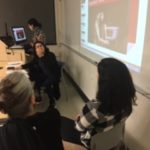
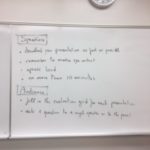
Thank you again for your wonderful presentations. I hope you continued reading during our long break. You should get to p. 283 of Those Who Leave and Those Who Stay by next class. Please read also the essay by van Ness (the first part) if you haven’t done so. For your post 7 please focus on: new topics emerging from the narrative; the historical references; minor characters and how they are represented.

Please read other students’ comment and be respectful for the meta-poster and post in time.

If you haven’t done so, please take the survey.

Remember to bring back to class the notes that you took during the presentation.


Midterm Presentations-Program


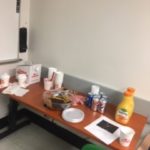
10:00-10:15             Coffee

10:15-11:00             Session 1Moderator: Julie Anne Forgione

10:15-10:25             Annabella Shehata, The Woman’s Body in the Neapolitan Novels

10:30-10:40               Ariana Guzman, An Analysis of the Use of Dolls in Elena Ferrante’s Neapolitan Novels

10:45-10:55               Zevi Gkana, Guilty pleasures in Ferrante’s Neapolitan Novels

11:00-12:00             Session 2Moderator: Ariana Guzman

11:00-11:10               Kelsey Hyppolite, Ferrante’s Women: Parallels with Real Life

11:15-11:25               Jackie Vargas, A Parasitic Friendship

11:30-11:40               Irini Belitsis, Female Identity: Lila and Lenù’s Reciprocated Reliance and           Dependency

11:45-11:55               Christopher Erazo, Who is Truly the “Brilliant Friend”

12:00-1:00pm           Session 3 – Moderator:  Irini Belitsis

12:00-12:10               Julie Anne Forgione, My Brilliant Friend and The Story of a New Name: The First Two Volumes of Ferrante’s Neapolitan Novels as Metafiction

12:15-12:25               Katherine Jackson, Views on Education in the Neapolitan Novels

12:30-12:40              Shoshana Mintz, Functions of Writing in the Neapolitan Novels

12:45-12:55               Paul Frediani, Circle of Violence


Followed by closing remarks by Professor Stefania Porcelli


Reminder – writing workshop

Hi!

This is a reminder that tomorrow there will be a writing workshop (how to write a final paper) in room 1324 HW, at 2.30-3-30pm, conducted by Luca Zamparini and myself. We will focus on how to choose a topic and develop a thesis statement, as well as on the typical structure of a paper.

I hope you can be there!